Tabby
General
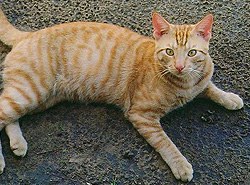
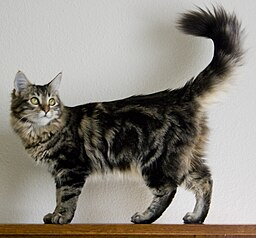
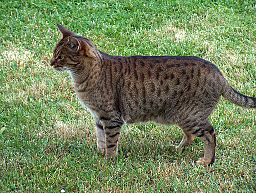
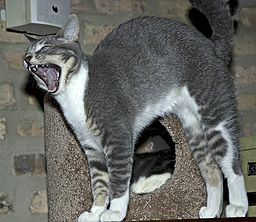
Tabby is one of the most common patterns in cats. It is caused by a gene called "Agouti", which causes the cat to have stripes on the face, legs, and tail, and some type of striping, spotting, blotching, or ticking on the body. In the wild, this pattern helps cats blend into their environment, but through domestication and selective breeding, cats now come in a variety of unique and flashy tabby patterns.
In petz, we represent tabby using textures listed on the Texture Library as well as with paintballz; please note that UKC's Texture Library is an archival copy of PKC's, and more tabby textures have been made since - as long as these textures accurately represent the patterns they intend to, they are accepted. Pattern descriptions for paintballs-created tabbies are towards the end of the doc.
Keep in mind that not every breed that accepts tabby accepts all tabby patterns, so always make sure to consult the individual breed standard.
A Texture Primer
Before getting into the finer details of the tabby pattern, here is a small table that displays examples of different tabby textures and how they are intended to be used to depict the tabby pattern. Only a small handful of textures are used in the table - there are many more accepted for use. Further details on each pattern and the placement of the textures is described in depth further down the doc.
Each row in the table features examples for both standard textures and rex/wirehair textures - rex and wirehair catz must use the rex/wirehair textures to accurately depict their fur texture, whereas shorthair and longhair catz must use the standard textures. An exception to this is heavy tabby - shorthair, longhair, and rex/wirehair catz may use the standard textures.
It is highly recommended that you use textures from the same texture 'sets' as they are designed to be used together to create an accurate tabby pattern/look, rather than mixing and matching between sets. For example, if using a LWH Barring texture for the horizontal tabby stripes, it is preferable to also use a LWH tabby texture for the body pattern. Some texture sets do not include both a horizontal barring texture and a body pattern texture - it is up to you to decide which other textures to use to create a visually realistic tabby. Ticked tabby textures can be used with any barring texture, as long as the rules surrounding the coat type are upheld - i.e the standard ticking texture is used with a standard barring texture on a shorthair or longhair cat, and a rex/wirehair texture is used with a rex/wirehair barring texture on a rex/wirehair cat.
| Name of Pattern | Standard Textures | Rex Textures | Usage Information | Examples |
|---|---|---|---|---|
| Barring or Horizontal Stripes |       |
   |
Horizontal barring/stripes - follows the pattern under 'Stripes', detailed below. These are combined with a body pattern texture to create a full tabby look | 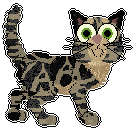 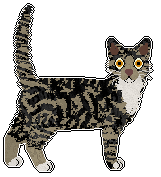 |
| Body Pattern - Classic |    |
  |
Body pattern - follows the pattern under 'Body Pattern', detailed below. These are combined with a barring texture to create a full tabby look | 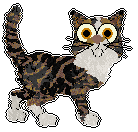 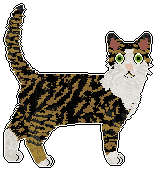 |
| Body Pattern - Mackerel |         |
    |
Body pattern - follows the pattern under 'Body Pattern', detailed below. These are combined with a barring texture to create a full tabby look | 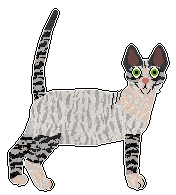 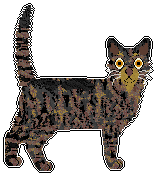 |
| Body Pattern - Spotted |      |
   |
Body pattern - follows the pattern under 'Body Pattern', detailed below. These are combined with a barring texture to create a full tabby look | 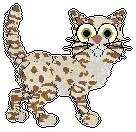 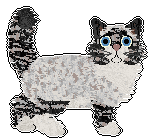 |
| Body Pattern - Ticked |    |
   |
Body pattern - follows the pattern under 'Body Pattern', detailed below. These are combined with a barring texture to create a full tabby look | 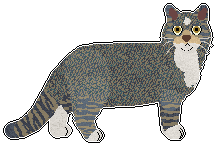 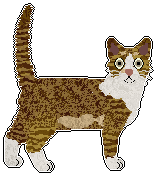 |
| Diagonal Barring/stripes |    |
 |
Optional for use - can be used on the tail instead of horizontal barring/stripes to create a more realistic appearance on catz with drop tails, or can be used on knees & elbows as a transition between the horizontal barring and the body pattern | 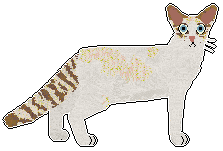 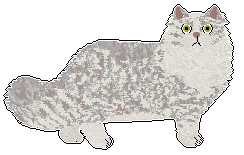 |
| Uni-directional Textures |       |
     |
Textures based off the PFM Tabby textures, such as thm2.bmp and its recolours, where thin stripes move in multiple directions. These can be used all over body, replacing both the horizontal stripes and body pattern, or can be used in place of horizontal striping with a different texture for the body pattern. Note that not all tabby colours can be achieved with the available rex/wirehair textures of this type | 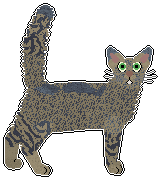 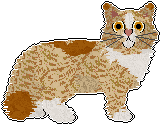 |
| Heavy Tabby | Horizontal barring - 
Body Patterns -   
|
None - rex/wirehair catz can use the standard heavy tabby textures | Heavy tabby is a seperate pattern and only accepted if specifically listed in the breed standard. Follows the pattern under 'Heavy Tabby', detailed below. | 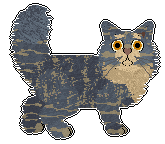 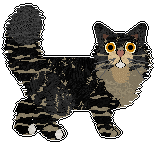 |
A note on Ivory Tabby textures
There is slight colour variance between some of the accepted ivory tabby textures, and UKC stewards have decided that while some accurately represent cream/cream silver/cream golden tabby, some are slightly too pale. The paler textures are better for representing ivory striping in tabby points/minks/burmese where ivory is accepted as a body colour, and the darker can be used for both that and to represent cream/cream silver/cream golden tabby as standard. The table below defines which currently accepted/recognised ivory tabby textures are accepted for each category. If wanting to use a texture not shown here, or if you are just unsure, feel free to ask a steward for guidance
If using a palette and are aiming for ivory/ivory as cream/cream silver/cream golden tabby, aim for a look closer to that of the textures in the second column, rather than the first
Note: When referring to 'body colour' here, it is to describe the body colour (differentiated from point colour) in colourpoint, mink, and burmese, and not the body pattern in tabby cats. In whatever pattern or use, tabby textures must follow the placement guidelines as outlined in the 'Barring, Body, and Specific Area Patterns' section below.
| Accepted only as a body colour in tabby points/mink/burmese | Also accepted as cream/cream silver/cream golden tabby | |
|---|---|---|
| Shorthair/Longhair |        |
         |
| Rex |       |
Currently None |
| Heavy |    |
    |
Barring, Body, and Specific Area Patterns
All tabbies, regardless of pattern, should follow these pattern guidelines:
Stripes
The following areas should have horizontal stripes (called "barring"):
- Head: Can be horizontally striped or use the body pattern, or a combination of both i.e. horizontal striping on the cheeks and vertical striping on the head ball itself
- Tail: Should be striped. The tail tip may be a solid version of the striping colour. In ticked tabbies, it is accepted for only the 2nd half of the tail (the half towards the tip) to be striped. Diagonally striped furfiles may be used on the tail as an alternative to horizontal/vertical stripes
- Legs:
- Toes must be solid base colour on all four feet
- The line between the ankle and knee must be horizontally striped
- The line between the wrist and elbow must be horizontally striped
- Anything in between toes and line between the ankle and the knee, and toes and the line between the wrist and elbow, may be horizontally striped or solid base colour
- Must be symmetrical - i.e. the degree of striping on the left hind must match the right hind, and the left fore must match the right fore
- Any striping on the limbs must not be broken by solid base areas (i.e. if the foot and ankle are striped, so must the area of leg in between)
- Maximum hind leg striping is up to and including the knee
- Maximum front leg striping is up to but not including the shoulders
Ideally, the width of barring should reflect the rest of the cat's pattern (i.e ticked and Spotted have thin or medium width bars, and in Mackerel and Classic the bars may be the same width as the body bars or slightly thinner) however due to the limitations with textures this is not a rule, only guidance. Ultimately, it is up to you to use a combination of textures to depict a realistic tabby. For the tail, it is preferred that the direction of the bars gives the impression of rings around the tail.
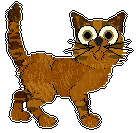
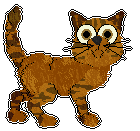
Minimum leg barring (left) & Maximum leg barring (right). Please note that the facial markings can vary, these pictures only illustrate the leg markings.
Body Pattern
The following areas should use the body pattern:
- Chest, butt, belly, shoulders, hips, knees: Follows one of the tabby patterns listed below (Classic, Mackerel, Spotted and Ticked). The same pattern is displayed over the whole torso, shoulder ball, hip ball, and hip-knee line - i.e a cat with a Mackerel body pattern must use only that body pattern. Multiple body patterns cannot be used on the same cat.
No Pattern
The following areas should be left solid in all tabbies:
- Toes/fingers: Base colour, no striping
- Muzzle (chin, jowls): Base colour, no striping
Muzzles
The snout (whether the snout ball or the area around the nose and between the eyes) can:
- Be solid base colour
- Be solid base colour with darken furfile
- Use a ticked/tipped texture (including on classic/mackerel/spotted tabbies. Must use the same base and stripe colours as used on the rest of the cat)
- Use the horizontal barring/striping texture as used elsewhere on the cat
The snout cannot be solid stripe-coloured.
All tabbies may have  chin and/or jowls without fault.
Ears
The ears can:
- Be solid base colour
- Be a darker version of the solid base colour (e.g. a cat with 40 as a base colour can use 49 on the ears)
- Use a horizontal barring/striped texture (same texture and colours as used on legs/tail) or a ticked/tipped furfile (including on classic/mackerel/spotted tabbies. Must use the same base and stripe colours as used on the rest of the cat)
- Be solid stripe colour
- Be a combination of the above where the tip of the ear and/or the ear edges are darker (stripe colour or darker version of the base colour) with the rest of the ear striped or ticked as mentioned above. This can also be achieved using paintballs. The back of the ear (the shell shape) should not be darker than the edges or tip. We do not suggest using both striped AND ticked/tipped furfiles in combination on an ear as ball roll can make the stripes move and give base colour in an inappropriate place (e.g. give the effect of a base coloured tip on a ticked ear - unrealistic). If done, the overall effect must be of an ear that gradually moves from base to stripe colour from the base to the tips of the ears
Where visible (i.e. when not obscured by white), tabby markings on the ears must be symmetrical. Inner ear hair and ear linings must follow the rules outlined on the Detail Features doc. In tabbies, this means that inner ear hair must be base or light marking coloured - it cannot be stripe-coloured.
Light & Optional Markings
Light Markings
All tabbies may have lighter markings. When present, these should be found on the throat and/or chin. Light markings may also be on the front of the chest, muzzle, underside of the body, and/or around the eyes. If present and where possible, it is preferred that the chin marking connects to the throat, and the throat marking connects to the chest, otherwise they appear as an incomplete marking.
Allowed marking colours:
- Black/chocolate tabby:


- Cinnamon/red tabby:

- Blue/lilac/fawn/cream tabby:
- All silver and gold tabbies:
- Black/chocolate/cinnamon golden tabby also allow
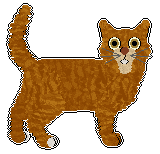
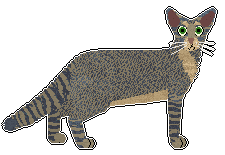
Some examples of tabbies with varying degrees of light markings.
Optional Markings
These are markings can be used, when possible, by the hexer who wants to strive for the most realistic tabby possible. They are optional markings, not required.
- Head: The forehead shows a set of markings that form an M above the eyes, with <> shaped markings by the eyes
- Throat: Sides of the neck are horizontally striped. The throat is a solid version of the base colour - these markings may take the form of necklaces that extend across the front of the throat over any unstriped areas (including light markings). Necklaces at maximum extend across the entire neck, going down no further than the bottom of the shoulder, and no wider than the front of the shoulder
- Body: The front of chest and underside are unmarked base color. The top of the body (the cat's back of neck to rump) should never be unmarked and may display a concentration of marking in the form of one or more dorsal stripes (depicted by paintballs)
- Belly: The underside may have belly spots. These spots match the stripe colour and overlap any unstriped areas (including light markings)
- Hind legs: The "heels" are a solid version of the striping colour. In most cat files, this can't be achieved (you can't colour the whole line the striping colour), but it's something hexers can aim for if they want to allow extra realistic markings.
- Toes: The toe tufts (in files that have distinct toe tufts) may be a solid version of the striping colour. This simulates the look of stripe-coloured foot bottoms
- Tail: The upper/top side of the tail may show a concentration of markings in the form of a dorsal stripe (depicted by paintballs), provided there is a dorsal stripe along the back as well
Tabby Patterns
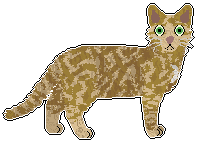
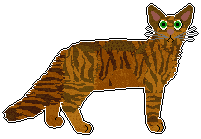
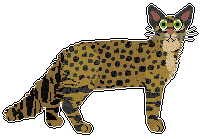
Below are more examples and descriptions of the four tabby body patterns, as seen in the table above:
| Classic | Mackerel | Spotted | Ticked |
|---|---|---|---|
 |
 |
 |
|
| Wide, swirly markings | Tight thin stripes, running vertically or at a diagonal (e.g. PFM Tabby textures). Horizontal stripes on the body are a DQ | The stripes are broken into spots that can be round or somewhat elongated. If elongated, should run vertically | The body has uniform ticking instead of spots or stripes |
Heavy Tabby
If specifically listed in the standard as allowed, 'heavy' classic/mackerel tabby is accepted. Specific textures are used to achieve this pattern. Heavy tabby follows the above descriptions of barring, body, and specific area patterns, with the following modifications:
- Head: As for normal tabby, may have heavier than usual striping
- Tail: Heavily striped, or a solid version of the striping colour
- Legs: Heavily striped, feet may be a solid version of the striping colour
- Body: Heavily striped, using a furfile that uses more of the striping colour than usual
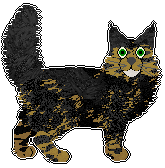
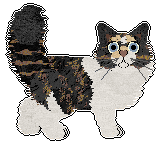
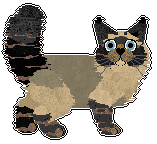
Some examples of heavy tabby.
Paintball Tabby Patterns
In order to achieve a realistic tabby easily, it is highly recommended to use textures. However, in addition to using furfiles to create tabby patterns, it is also possible to use paintballs. Paintball tabby must still meet the required minimum striped/unstriped areas, in addition to the descriptors below. It is also possible to use a mix of paintballs and furfiles: this would mean furfiles on the legs, tail, head, and other detailed or linez-heavy areas, and paintballs on the body.
- Classic: The body is striped identically on both sides with swirls over the shoulder that when viewed from above resemble a butterfly. The centre of the body has swirls that resemble a bullseye. The spine has a central dorsal line with another stripe running parallel to it on each side. The head has lines extending from the forehead M backwards to the shoulder swirl. Each cheek has a line extending outwards from the eye and merging with the head lines, as well as swirls lower down. The legs and tail are heavily barred.
- Mackerel: Narrow vertical pencillings along the body, transitioning into horizontal pencillings on the legs and tail. The head has lines extending from the forehead M backwards and merging into the body stripes. Each cheek has a line extending outwards from the eye and merging with the body stripes. At least one full 'necklace' stripe must be present - see the optional markings section above for details.. Stripes may be thicker closer to the spine, forming a dorsal stripe.
- Spotted: Small or large spots covering the body, suggesting but not forming a mackerel or classic pattern. Spots must be dense; too few spots is a DQ. The head has broken lines extending from the forehead M backwards. Dorsal stripe may be present but broken. Legs and tail are spots merging into stripes. Each cheek has a line extending outwards from the eye and breaking into spots along the shoulder.
- Ticked: Paintball tabbies not permitted. Only furfile ticked tabbies are allowed. However furfile ticked tabbies may have paintball stripes on the legs and shoulders.
Tabby Colours
In all cases, the first colour is the base colour and the second colour is the stripe colour.
Regular (Non-Inhibited) Tabbies
Dense Colours
Black (Brown) Tabby

 with
with  striping
Chocolate Tabby
with  striping
Cinnamon Tabby
with 
 striping
with  striping
Red Tabby
with striping
with striping
Light with dark striping
Dilute Colours
UKC stewards have noticed that some of these dilute tabby combinations do not really mimic the real-life colours all that closely - however, for legacy reasons and due to the limitations of petz, they are still accepted without fault. You may be able to achieve more realistic colours using palettes - please refer to photographs of real cats in these colours/patterns to see what to aim for.
Blue Tabby
with 
 striping
with striping
Light with dark striping
Light with dark striping
Lilac Tabby
 with striping
with striping
Light with dark striping
Light with dark striping
Fawn Tabby
with striping
with striping
Light with dark striping
Cream Tabby
with striping
with striping
Light with dark striping
Light with dark striping

Shaded Colours
Silver-based
Can be called cameos in the red/cream colours, silver tabby in others.
Black Silver
 with striping
Chocolate Silver
with striping
Cinnamon Silver
with striping
Red Silver/Cameo
with striping
Blue Silver
with striping
with striping
Light with dark striping
Lilac Silver
with striping
with striping
Light with dark striping
Fawn Silver
with striping
with striping
Light with dark striping
Cream Silver/Cameo
with striping
Light with dark striping
Gold-based
Called gold tabby.
Note: Because gold tabby is a rather rare and new pattern, it is only allowed if specifically listed in the breed standard, even if it says "all combinations accepted".
Black Golden
with striping
Chocolate Golden
with striping
Cinnamon Golden
with striping
Red Golden
with striping
Blue Golden
with striping
Lilac Golden
with striping
Fawn Golden
with striping
Cream Golden
with striping
Light with dark striping
Light with dark striping
Example Gallery
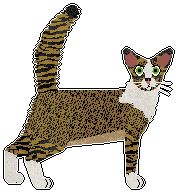
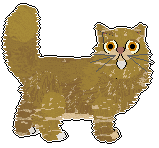
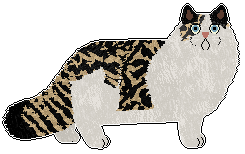
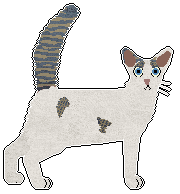
Below is a gallery of tabby patterned catz, either in just the tabby pattern or combined with other patterns. Many more combinations than these are acceptable, this is just to provide some visual guidance to the text above
|
|
|
| A black classic tabby with light markings | A black classic tabby with white in the mitted pattern | A black classic tabby with white in the tuxedo pattern |
|
|
|
| A black classic tabby with white in the tuxedo pattern | A blue heavy tabby with light markings | A black heavy tabby with light markings and white in the bicolour pattern |
 |
|
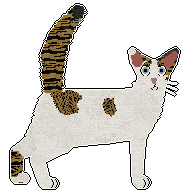 |
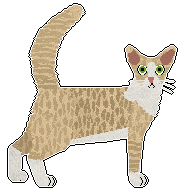
| A cream spotted tabby with white in the tuxedo pattern | A blue ticked tabby with light markings | A black ticked tabby with white in the harlequin pattern |
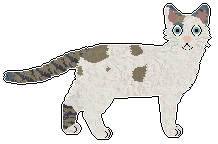 |
|
|
| A blue tabby point with white in the harlequin pattern | A red mackerel tabby with light markings and white in the trim pattern | A hairless (brush type) black silver mackerel tabby with white in the tuxedo pattern. Note that this cat is not a-reg, as Sphynx are only permitted in the 'fully hairless' type of hairless catz, which does not allow for such large fur-pointed areas, and silver tabby is not allowed |
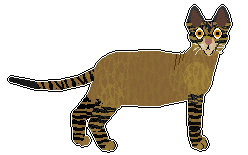 |
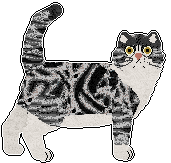 |
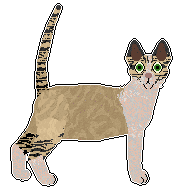 |
| A hairless (velour type) black spotted tabby with light markings. Note that this cat is not a-reg, as Sphynx are only permitted in the 'fully hairless' type of hairless catz, which does not allow for such large fur-pointed areas | A black silver classic tabby with white in the tuxedo pattern | A hairless (velour type) black golden classic tabby with white in the tuxedo pattern. Note that this cat is not a-reg, as Sphynx are only permitted in the 'fully hairless' type of hairless catz, which does not allow for such large fur-pointed areas, and golden tabby is not allowed |
|
|
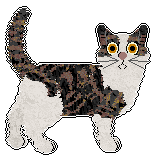 |
| A fawn or lilac silver mackerel tabby with white in the tuxedo pattern | A black silver spotted tabby point with white in the tuxedo pattern | A black classic tabby with white in the bicolour pattern |
 |
|
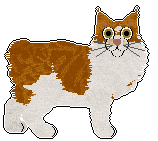 |
| A black ticked tabby with light markings and white in the tuxedo pattern | A black heavy tabby with light markings and white in the trim pattern | A red classic tabby with light markings and white in the bicolour pattern |
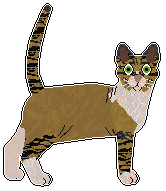 |
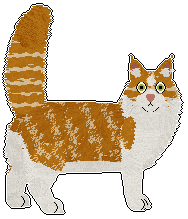 |
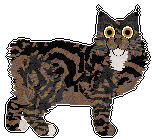 |
| A hairless (velour) black classic tabby with white in the tuxedo pattern | A red heavy tabby with white in the tuxedo pattern | A black classic tabby with white in the trim pattern |
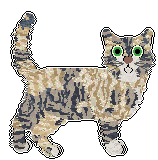 |
|
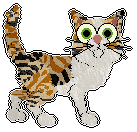 |
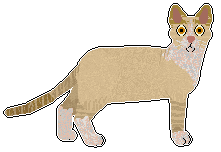
| A blue silver mackerel torbie with white in the tuxedo pattern | A red tabby with white in the tuxedo pattern | A black classic torbie with white in the tuxedo pattern |
 |
|
|
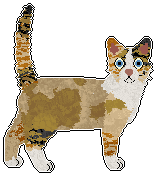
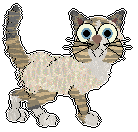
| A hairless (fully hairless) cream mackerel tabby with white in the tuxedo pattern | A chocolate ticked tabby with light markings and white in the tuxedo pattern | A black mackerel tabby with light markings |
 |
 |
|
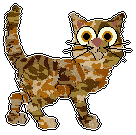
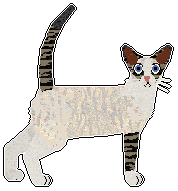
| A black (natural/seal) classic torbie mink with white in the tuxedo pattern | A blue spotted tabby point with gradually fading points, and white in the tuxedo pattern | A cinnamon silver spotted tabby with light markings |
 |
 |
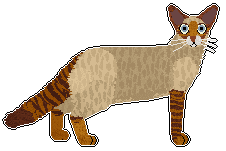 |
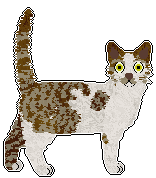
| A chocolate classic torbie | A black mackerel tabby point with white in the tuxedo pattern | A red spotted tabby point |
 |
 |
|
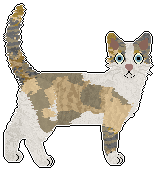
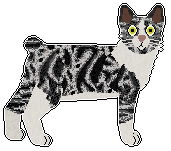
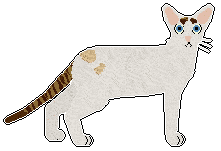
| A chocolate spotted tabby with white in the bicolour pattern | A blue mackerel torbie mink with white in the bicolour pattern | A blue ticked tabby with light markings and white in the mitted pattern |
 |
 |
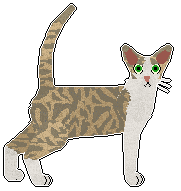 |
| A black silver classic tabby with white in the tuxedo pattern | A chocolate tabby point with white in the van pattern | A fawn classic tabby with white in the tuxedo pattern |
 |
 |
|
| A cream heavy tabby with white in the trim pattern | A black golden classic tabby with white in the bicolour pattern | A cinnamon silver mackerel tabby point with white in the harlequin pattern |
|
 |
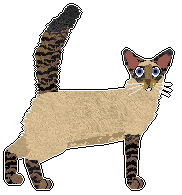 |
| A black heavy tabby point with body shading | A blue ticked tabby with white in the harlequin pattern | A black tabby point |
|
||
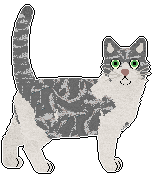
| A blue silver classic tabby with white in the bicolour pattern |